Report

2026 EHA Global Hematology Congress In-Depth Analysis Report

2026 EHA Global Hematology Congress In-Depth Analysis Report

The 31st EHA Congress in Stockholm marks a paradigm shift across hematologic malignancies. Five forces dominate: bispecific antibodies become new standards, menin inhibitors break through in AML, non-covalent BTK + next-gen BCL2 reshape CLL, MRD-driven fixed-duration strategies prevail, and CAR-T enters multi-generation upgrades. MonumenTAL-3 delivers a 72% PFS risk reduction (triplet) and 67% (doublet) in RRMM, while KOMET-007 demonstrates 90–96% CRc and >80% MRD-negativity in NPM1m/KMT2A-r AML — the field is now defined by deep, durable, MRD-guided remissions. Janssen consolidates MM leadership (teclistamab + talquetamab dual track); BeiGene's zanubrutinib + sonrotoclax all-oral combo challenges venetoclax+obinutuzumab in frontline CLL.
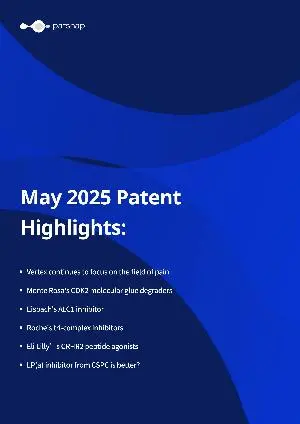
May 2025 Patent  Highlights

May 2025 Patent Highlights

1,Vertex continues to focus on the field of pain 2,Monte Rosa's CDK2 molecular glue degraders 3,Eisbach's ALC1 inhibitor 4,Roche's tri-complex inhibitors 5,Eli Lilly’s CRHR2 peptide agonists 6,LP(a) inhibitor from CSPC is better?

JMC Annotation Spotlight: Analysis of Breakthrough Therapeutics

JMC Annotation Spotlight: Analysis of Breakthrough Therapeutics

This report features four highly representative and innovative therapeutics recently profiled in the JMC Annotation column (submitted before December 2024 and with no clinical failure reported to date). The selection spans a diverse range of modalities, including covalent inhibitors, receptor-selective agonists, and CNS-penetrant compounds. The drugs are being developed by leading pharmaceutical and biotech companies such as Chiesi Farmaceutici S.p.A., Galapagos, Scorpion Therapeutics, and AstraZeneca.Through a systematic examination of the R&D paths of these compounds, this report aims to uncover their therapeutic potential, while also offering insight into their commercial prospects and developmental challenges.

Global Potential Targets and FIC Product Research Report (Q4 2024)

Global Potential Targets and FIC Product Research Report (Q4 2024)

1,A comprehensive review was conducted of the 55 new drugs approved by the FDA in 2023, including 20 First-in-Class (FIC) therapies. Additionally, an analysis was performed on 8 promising FIC single-target agents and 10 FIC dual-target agents with significant potential for the first three quarters of 2024. 2,This report provides a comprehensive overview of the promising First-in-Class (FIC) single-target and dual-target agents anticipated for the fourth quarter of 2024. It includes detailed analyses of their mechanisms of action, current research and development progress, and potential clinical applications. 3,Depth Analysis of Potential Single-target FIC Varieties: This section provides an in-depth examination of the following single-target First-in-Class (FIC) agents: LTCC modulators, M2R allosteric modulators, S2R modulators, BRD4 BD2 inhibitors, PKMYT1 inhibitors, TAK1 inhibitors, NLRP3 inhibitors, and oral KRAS G12D inhibitors. The analysis covers their mechanisms of action, current research progress, and patent application status. 4, In-depth Analysis of Potential Dual-Target FIC Varieties: This section provides a comprehensive examination of the FXR-LIFR dual-target regulators and ROCK-HDAC dual-target inhibitors, both of which are First-in-Class (FIC) compounds. The analysis delves into their development potential and patent landscape.

Analysis of Lilly (LLY.N) Q3 2024 R&D Update

Analysis of Lilly (LLY.N) Q3 2024 R&D Update

As the largest publicly traded pharmaceutical company by market capitalization, Eli Lilly has successfully launched multiple blockbuster drugs, with several high-potential candidates in its pipeline. Given the long and unpredictable R&D cycle of innovative drug development, similar investigational therapies often share common scientific and regulatory challenges.By analyzing the R&D strategies and pipeline decisions of major pharmaceutical companies, industry stakeholders can gain valuable insights into emerging trends, risk mitigation strategies, and innovation directions that could shape the future of the biopharmaceutical industry。

From tumors to autoimmune diseases, TCE bispecific antibody sees new opportunities emerging

From tumors to autoimmune diseases, TCE bispecific antibody sees new opportunities emerging

T-cell engager bispecific antibodies (TCEs) represent the most widely utilized bispecific antibody mechanism. They function by simultaneously binding to tumor-associated antigens (TAAs) and CD3, a fixed component of the T-cell receptor (TCR) complex (CD3 × TAA).T-cell engager bispecific antibodies (TCEs) have demonstrated robust therapeutic efficacy in hematologic malignancies. For instance, CD20/CD3 glofitamab achieved a 50% complete response (CR) rate in patients with ≥2L relapsed/refractory diffuse large B-cell lymphoma (DLBCL), while retaining a cost advantage over CAR-T therapies. Current development priorities for next-generation CD3 bispecific antibodies include reducing cytokine release, improving response rates, and extending half-life . Current challenges in solid tumors include: 1. Cytokine release syndrome (CRS); 2. Off-target toxicity due to tumor antigen shedding; 3. Insufficient T-cell infiltration into the tumor microenvironment and recruitment of immunosuppressive T-cell subsets.Whether TCE bispecific antibodies can achieve deep tissue clearance, maintain long-term efficacy with continued use, and whether they will reduce efficacy when combined with immunosuppressants remain to be verified with long-term data. It is possible that CAR-T and TCE bispecific antibodies may co-exist in the treatment of autoimmune diseases, with TCE offering advantages such as “on-demand” use, improved safety, and lower costs.

Advanced Technologies and Intellectual Property Trends in ADC Research and Development

Advanced Technologies and Intellectual Property Trends in ADC Research and Development

Currently, antibody-drug conjugate (ADC) therapy is experiencing a phase of robust development. Numerous ADC drugs have received regulatory approval for market launch globally and have demonstrated significant efficacy across various tumor types. However, ADC therapy also encounters several practical challenges, such as ensuring drug stability, managing toxicity, designing clinical trials, and controlling costs. To address these challenges, researchers and pharmaceutical companies must continuously explore innovative technologies and optimize the design and manufacturing processes of ADCs to enhance both the safety and efficacy of treatment.This report offers a comprehensive analysis of the pivotal technologies and novel components associated with ADC therapy. It examines the current thriving landscape, practical challenges, and future innovations in ADC therapy. Additionally, it explores the global patent environment, including detailed patent analyses and emerging trends. Finally, the report anticipates potential future research directions for ADC therapy.

Next-Gen Therapeutics for  Fat Loss and Muscle  Preservation:   Emerging Targets and  Strategies

Next-Gen Therapeutics for Fat Loss and Muscle Preservation: Emerging Targets and Strategies

The core content of this report is about the global Next-Gen therapeutics drugs for fat loss and muscle preservation. Starting from the leading antagonist of Activin (Activin) that targets the Activin-ActRII-ActRI pathway, the report elaborates on the basic information, mechanism of action, and therapy of the Activin-ActRII-ActRI pathway, and focuses on analyzing the key drugs in the ActRII pathway and other drugs for treating obesity and muscle loss syndrome. It presents a clear and comprehensive overview of the recent developments in the global research and development of new generation weight loss drugs for fat loss and muscle preservation.The summary section recommends some promising drugs and provides the reasons for the recommendations as well as possible risk factors.

Roche's Bispecific Antibody Drug Emicizumab Patent Research and Practical Operation Guide

Roche's Bispecific Antibody Drug Emicizumab Patent Research and Practical Operation Guide

Emicizumab (Hemlibra) is a bispecific antibody developed by Roche that targets coagulation factors IXa and X. It was first approved by the FDA in November 2017 and received an expanded indication in 2018 for the prophylactic treatment of bleeding in hemophilia A patients, regardless of inhibitor status. This bispecific therapeutic is currently the only bispecific antibody drug used in the field of hemophilia. Since its market launch, Emicizumab has experienced a compound annual growth rate exceeding 300%, with sales surpassing $2 billion by 2020, thus becoming a blockbuster drug. In 2023, Hemlibra reported sales of CHF 4.147 billion (approximately $4.575 billion), reflecting a 16% year-over-year growth. The growth trajectory continues into 2024, with first-half sales reaching CHF 2.143 billion (approximately $2.529 billion). Sales are projected to reach $6.203 billion by 2028. As the highest-grossing bispecific antibody drug currently on the market, Emicizumab's patent landscape garners significant interest. This report aims to guide readers through a step-by-step patent analysis of the Emicizumab drug, ultimately providing a detailed patent landscape map. This can serve as a reference and provide insights for patent strategy in the bispecific antibody field.